 James Whitcombe
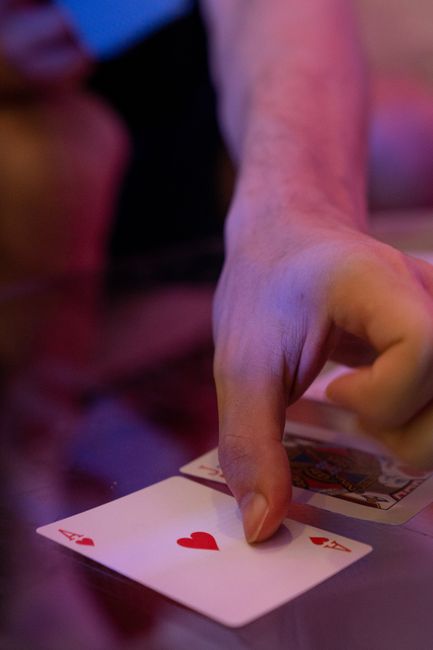
Drop a coin in a slot machine and pull the lever. That's the image most people have of gambling, and it is almost perfectly wrong. Modern slot machines don't have levers, they don't hold coins, and the outcome of your spin was decided the moment you pressed the button by a random number generator churning through thousands of results per second. Meanwhile, a poker player sitting three tables away is reading body language, calculating pot odds, and deciding whether the guy in the hoodie is bluffing. Both are iGaming. Both are gambling. They could not be more different in how you should approach them.
That gap matters more than most players admit. If you treat poker like slots, you will lose slowly and then quickly. If you treat slots like poker, you will overthink a game that has no memory and no opponents. Here's how to actually think about each one.
Slots: The Math Is Brutal, and That's the Point
A slot machine's house edge is baked into its return-to-player percentage, or RTP. A typical online slot sits between 94% and 97%. That sounds generous until you translate it. A 96% RTP slot keeps $4 of every $100 wagered, on average, over millions of spins. You are not playing against a dealer or another person. You are playing against a math model that grinds you down in tiny increments and occasionally hands back a jackpot to keep you interested. A detailed guide is available at สล็อต.
What most players get wrong is volatility. Two slots can share the same RTP and behave completely differently.
- Low volatility: frequent small wins, slow bleed. Think 5-reel fruit machines with modest multipliers. Good for stretching a bankroll over a long session.
- Medium volatility: the balanced middle ground. Wins land every 8-15 spins on average, with occasional 50x-200x hits.
- High volatility: long dry spells punctuated by huge payouts. You might spin 400 times with no meaningful win, then hit 1,000x. Brutal if your bankroll is small, thrilling if you're chasing a headline jackpot.
Here's a concrete tip: if you deposit $50, do not play a high-volatility slot with $0.50 spins and expect to survive. At 400 dead spins, you're gone in 80 minutes. Either drop to $0.10 spins or pick a low-volatility game. Match your stake to your bankroll, not to your ambition.
Also understand that slots are independent events. A machine that hasn't paid out in three hours is not "due." It has no memory. The RTP is a long-run average measured across millions of spins, not a promise to you personally in a single session. This is the single most expensive misconception in iGaming.
Poker: The Only Casino Game Where You Can Actually Have an Edge
Here's the uncomfortable truth for slot players: in poker, a skilled player can beat the rake and win long-term. In slots, no amount of skill changes the RTP. That doesn't make poker easy. It makes poker a different category of activity, closer to investing than to spinning.
Poker strategy rests on a few pillars that separate break-even players from winners:
- Position. Acting last gives you information. The button is the most profitable seat at the table for a reason. Play tighter from early position, wider from late.
- Pot odds. If the pot is $100 and you must call $20 to see the river, you're getting 5-to-1. If your draw has better than 1-in-6 equity, the call is profitable over time. Ignore this at your peril.
- Range thinking. Stop asking "what does he have?" and start asking "what is the full range of hands he'd play this way?" Your opponent has a distribution, not a single card.
- Bankroll management. A common rule is 20-30 buy-ins for the stakes you play. At $1/$2 no-limit with a $200 max buy-in, that's $4,000-$6,000. Playing above your roll is how good players go broke.
The rake is your real opponent. Online cash games typically rake 4-5% capped at a few dollars. That means you must win more than the rake to profit. In micro-stakes, the rake is proportionally devastating, which is why grinding $0.01/$0.02 is a learning exercise, not an income plan.
Betting: Where Information Beats Luck
Sports betting sits somewhere between these two worlds. Unlike slots, there is an information edge to be found. Unlike poker, you cannot control the outcome after the bet is placed. The bookmaker's margin, called the vig or juice, usually sits around 4-5% on a standard two-way market. On a coin-flip bet with -110 odds on both sides, you need to win 52.4% of the time just to break even.
This is why line shopping matters so much. If Book A offers -105 and Book B offers -110 on the same side, taking -105 pays for itself over hundreds of bets. Sharp bettors maintain accounts at multiple books for exactly this reason. They also bet early, when lines are softer and limits are higher, before the market corrects.
- Track every bet in a spreadsheet. Win rate, average odds, sport, market type. You cannot fix a leak you cannot see.
- Avoid parlays unless you enjoy donating margin. Each leg multiplies the bookmaker's edge.
- Live betting offers inefficiencies, but also faster decisions and worse impulsive behavior. Set rules before the match starts.
The Psychological Trap All Three Share
Slots, poker, and betting all exploit the same cognitive bug: the near-miss. Two cherries and a lemon feels almost like a win, and that near-miss releases dopamine similar to an actual payout. Poker players feel it when their flush draw misses by one card. Bettors feel it when their team loses on a last-second field goal.
The games differ, but the discipline required to walk away is identical. Set a session loss limit. Set a win threshold where you cash out rather than "playing with house money," which is a phrase that should not exist because it isn't real money once you've won it. Time limits matter too. A three-hour slots session at 600 spins per hour is 1,800 decisions with no cognitive benefit. Fatigue turns strategy into impulse.
What Actually Separates Winners From Donors
Across every vertical, from video slots to high-stakes hold'em to NFL spreads, the winning players share one trait: they treat gambling as a cost-controlled entertainment expense with an occasional upside, not as a strategy to make money. Poker is the exception where skill can produce a real return if you put in genuine study hours, track results, and treat it like a part-time job. Slots and betting are math games where the house is ahead, and no ritual, pattern, or lucky shirt changes that.
Enjoy the games. Learn the math behind them. Understand that variance will make you feel brilliant some nights and cursed on others, whether the game involves a deck, a reel, or a scoreboard. The player who understands the underlying mechanics loses less, plays longer, and enjoys it more. That's the only edge that generalizes across the entire iGaming landscape.


